
Decoupled vs. Monolithic WordPress: Is Headless Right for Your Next Project?
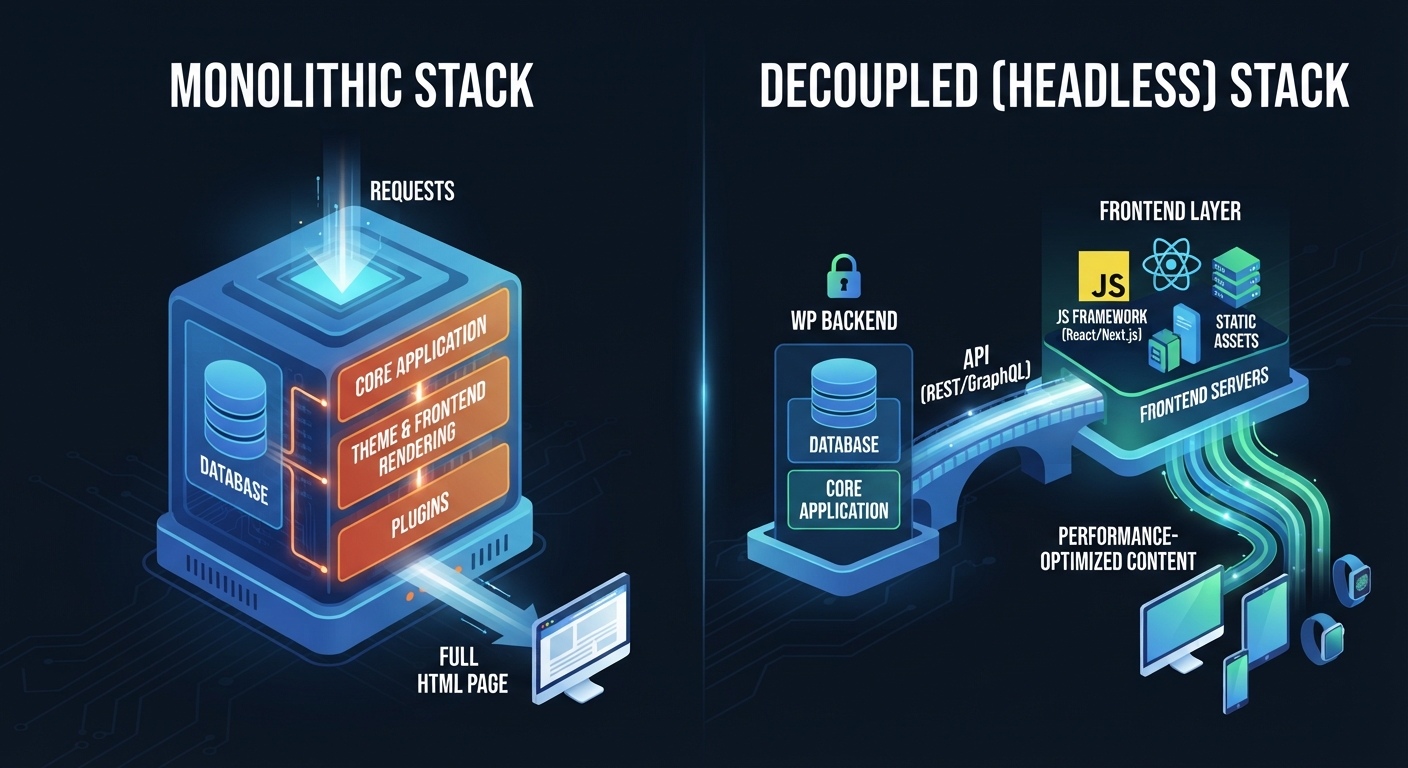
For two decades, the monolithic WordPress architecture-where the backend database, PHP rendering engine, and frontend theme live under one roof-has powered a massive chunk of the web. It is reliable, intuitive, and works out of the box for everything from personal blogs to complex e-commerce stores.
However, as web development trends shift toward ultra-fast JavaScript frameworks like React, Next.js, and Nuxt, a new architectural design has taken center stage: Headless WordPress (or decoupled WordPress).
By using WordPress strictly as a content management backend while serving the frontend via a separate JavaScript application through the REST API or GraphQL, developers unlock incredible speed and flexibility. But is it right for your project? Let's break down the realities of both approaches.
1. The Monolithic Powerhouse: When Traditional Wins
In a monolithic setup, WordPress handles everything. When a visitor requests a page, PHP queries the MySQL database, assembles the HTML, and sends it to the browser.
- The Advantages:
- Simplicity and Plugin Ecosystem: Every plugin, form builder, and SEO tool just works seamlessly out of the box because the frontend and backend share the same environment.
- Cost-Effective Maintenance: Traditional managed hosting environments are finely tuned for monolithic WordPress, meaning lower overhead and simpler deployment pipelines.
- No Content Editor Friction: Writers and marketers can preview pages live in the block editor exactly as visitors will see them.
2. The Headless Revolution: Speed, Security, and Separation
In a headless setup, WordPress is stripped of its frontend presentation layer. Content is fetched via API endpoints and rendered via a decoupled framework hosted on edge networks like Vercel or Netlify.
- The Advantages:
- Blazing-Fast Speed: Because the frontend is pre-rendered or served as static assets from global CDNs, page transitions feel instantaneous.
- Enhanced Security: Since the core WordPress database and admin dashboard are completely decoupled from the public-facing website, the surface area for malicious front-end attacks or SQL injections drops significantly.
- Omnichannel Delivery: You can push the same WordPress content seamlessly to web apps, mobile apps, digital displays, and smart devices using a single backend source of truth.
3. The Hidden Trade-Offs of Headless Architecture
Before rushing to rewrite your stack into a headless configuration, it’s vital to weigh the operational realities:
- Preview and Editing Complexities: Standard WordPress features like the live block editor, customizer, and front-end preview modes break down or require complex custom middleware to replicate.
- Plugin Dependency Failures: Many popular WordPress plugins rely on rendering PHP or frontend shortcodes. In a headless environment, these plugins will either fail or require you to rebuild their functionality entirely in JavaScript.
- Infrastructure Fragmentation: Instead of hosting everything under one unified, optimized managed stack, you now have to manage a backend server plus a separate frontend deployment pipeline, increasing operational complexity.
Choosing the Right Stack for Your Business
If you run a standard content site, corporate blog, or standard e-commerce shop, a high-performance monolithic WordPress stack backed by server-side caching and a global CDN will give you maximum ROI with minimal headaches.
However, if you are building an enterprise web app, require omnichannel content delivery, and have a dedicated JavaScript engineering team to maintain the frontend layer, headless WordPress architecture offers unmatched flexibility and raw speed.
👉 Whether you're scaling a traditional high-performance site or exploring modern edge delivery, OneStopWP provides the robust infrastructure you need. Explore our managed hosting plans today.