
Host-Side Performance: How to Optimize WordPress for Core Web Vitals
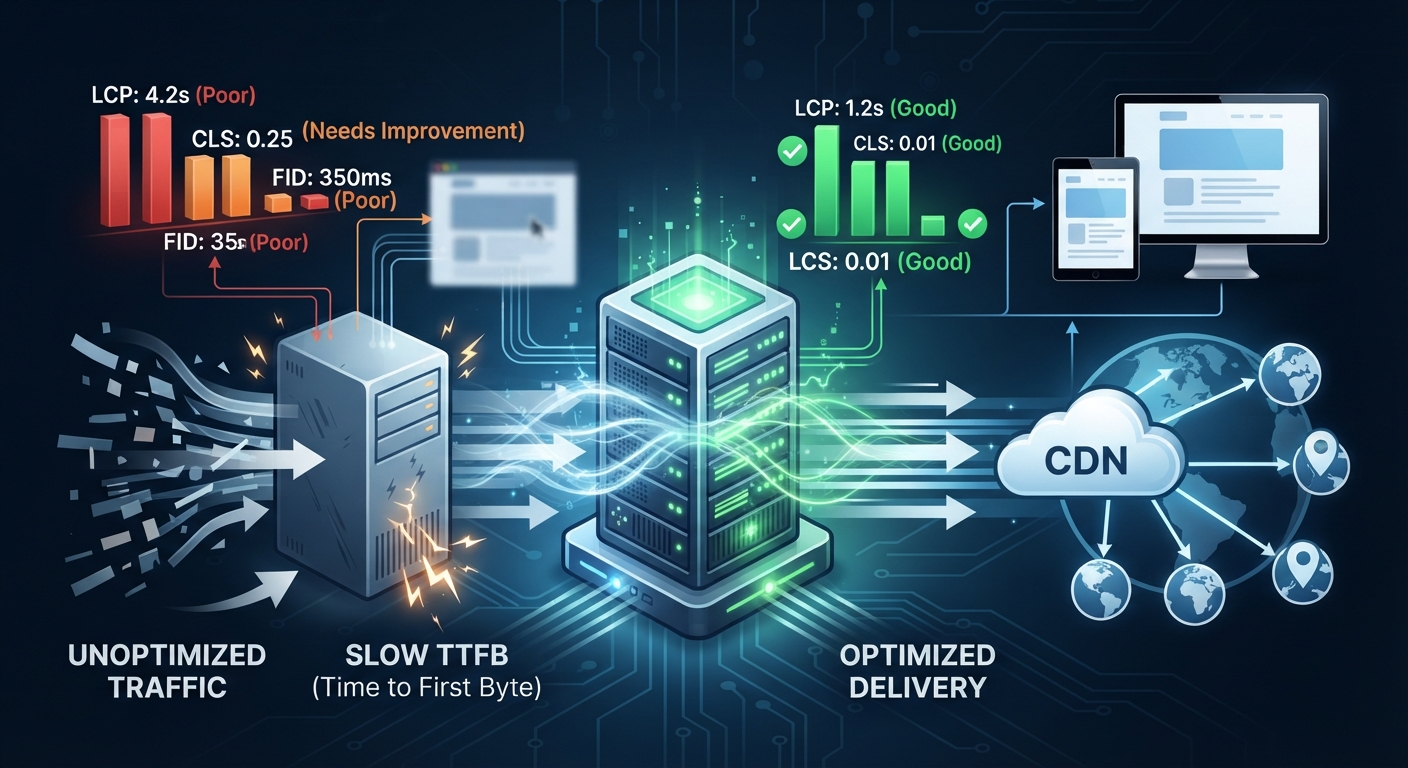
When site owners want to fix a sluggish website or improve their Google rankings, the usual advice sounds like a broken record: compress your images, minify your CSS, and delete bloated plugins.
While frontend optimization matters, it only tells half the story. You can run the leanest theme and optimize every JPEG on your site, but if your web server takes half a second just to respond to a request, your Google Core Web Vitals scores will still suffer.
True speed begins at the infrastructure level. Here is how host-side optimizations-caching, server compression, and edge delivery-drive the metrics that actually matter.
1. Conquering TTFB and LCP at the Server Level
Largest Contentful Paint (LCP) measures how long it takes for the main content of a page to load. A huge component of LCP is Time to First Byte (TTFB)-the speed at which your server responds when a user requests a page.
If you are on cheap, overcrowded shared hosting, your server has to spin up PHP and query a MySQL database for every single visitor. That creates massive bottlenecks.
- The Host-Side Fix: Object caching (like Redis or Memcached) and server-side page caching store fully rendered HTML in server memory or blazing-fast NVMe storage. Instead of making the database do heavy lifting for every visit, the server serves the cached page instantly, dropping your TTFB to mere milliseconds and giving your LCP a massive head start.
2. Eliminating Cumulative Layout Shifts (CLS) Before They Happen
Cumulative Layout Shift (CLS) measures visual stability-how much elements "jump around" on the screen while the page is loading. While usually tied to unassigned image dimensions or lazy-loading layout bugs in CSS, hosting architecture plays an unheralded role.
- The Host-Side Fix: Fast asset delivery ensures that critical fonts and stylesheets aren't delayed by slow server response queues. When your server delivers assets synchronously and reliably via a high-performance content delivery network (CDN), browser rendering engines receive everything they need right on time, preventing layout reflow chaos.
3. Edge-Level Compression and HTTP/3 Protocol
Delivering data efficiently across the globe requires modern network architecture. Older hosting protocols force browsers to download files sequentially, creating traffic jams that stall page rendering.
- The Host-Side Fix: Modern managed environments utilize HTTP/3 and multiplexing, allowing multiple files to be downloaded simultaneously over secure connections. Combined with edge-level Gzip or Brotli compression handled at the server or CDN level, file sizes shrink drastically before they even cross the finish line to the user's browser.
Stop Fighting Your Server
Optimizing a WordPress site shouldn't feel like an endless game of whack-a-mole with optimization plugins. When your hosting environment is engineered specifically for performance-leveraging edge caching, modern PHP versions, and enterprise-grade infrastructure-Core Web Vitals stop being a technical headache and start becoming a natural byproduct of a great host.
👉 Ready for lightning-fast speeds? Explore OneStopWP’s performance-optimized managed plans today.