
Global Edge Delivery: How CDNs and Server Locations Impact International Audiences
 Olivia H.3 min read
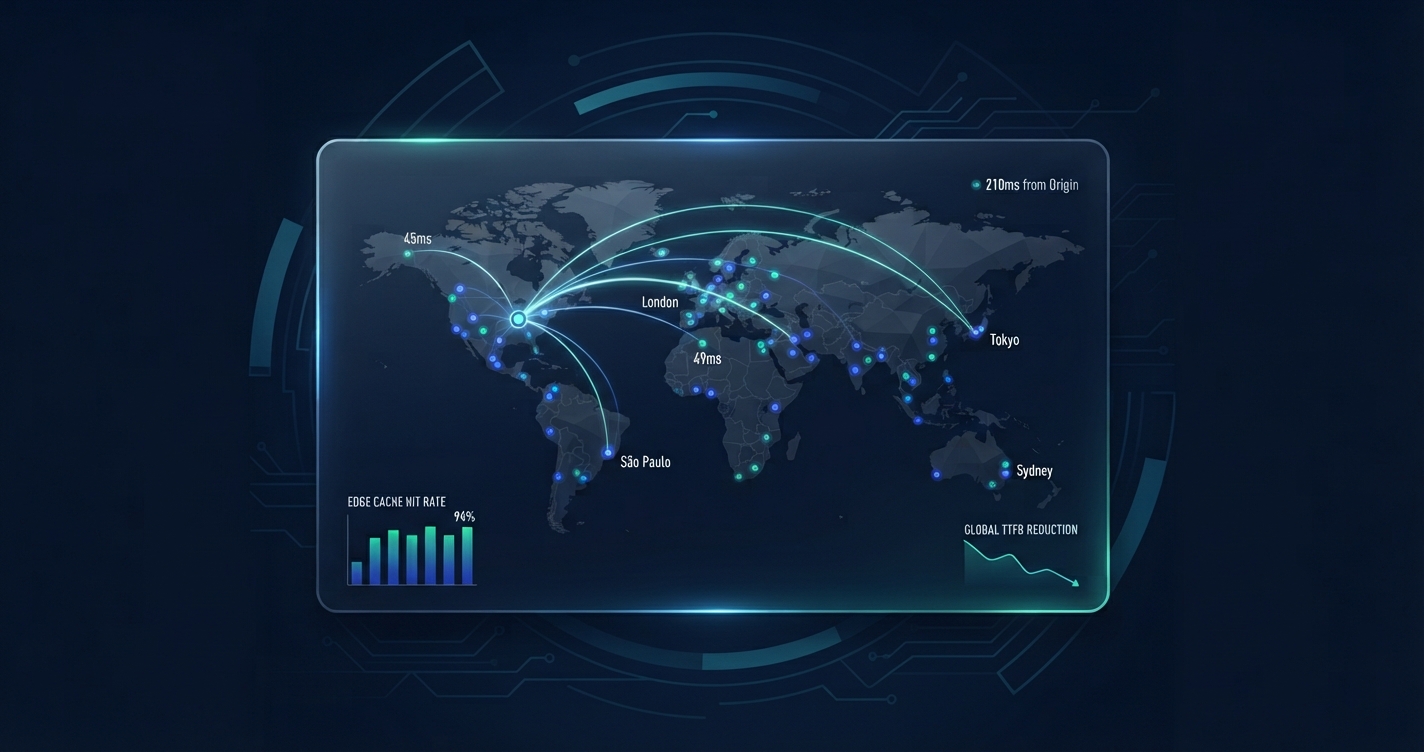
When you benchmark your WordPress site from a test node located in the same city as your origin data center, load times can look effortless. Yet a visitor opening that exact same page from another continent may experience sluggish Time to First Byte (TTFB) and delayed Largest Contentful Paint (LCP)-even when your server CPU is completely idle.
That gap comes down to physical distance and network hops. While data travels through fiber-optic cables near the speed of light, every router hop, TCP/TLS handshake, and cross-oceanic round trip adds measurable milliseconds. Pairing smart server location choices with WordPress CDN edge caching eliminates that geographic penalty, serving your site from Points of Presence (PoPs) right next to your visitors.
1. The Physics of Latency: Why Origin Server Location Still Matters
Every uncached visit to a WordPress website requires multiple round trips between the visitor's browser and your origin server:
- DNS Resolution & TCP/TLS Handshake: Establishing an encrypted HTTPS connection before a single byte of HTML is requested.
- HTML Document Generation: PHP executes theme and plugin logic, queries MySQL, and builds the initial DOM response.
- Asset Waterfall: Once the browser parses the HTML, it opens parallel requests for CSS stylesheets, JavaScript bundles, web fonts, and hero images.
If your origin server sits in Frankfurt and a customer visits from Sydney or São Paulo, each round trip can add 150ms to 300ms+ of pure transit latency. Multiply that across sequential asset requests and dynamic AJAX calls (like WooCommerce cart fragments or search queries), and page load times quickly climb past the two-second threshold where conversion rates drop.
Best practice: Always choose an origin data center located closest to your primary customer base or where your uncached backend operations (such as WooCommerce checkouts and editorial admin workflows) originate.
2. Static Asset CDN vs. Full-Page Edge Caching
Many site owners assume turning on a basic Content Delivery Network solves global latency automatically. In reality, there is a critical difference between static-asset CDN delivery and full-page edge caching:
- Static Asset CDN: Offloads heavy files-images (WebP/AVIF), CSS, JavaScript, and fonts-to global edge nodes. This saves origin bandwidth and speeds up asset downloads, but the initial HTML request still travels back to your origin server, leaving distant users with a high TTFB.
- Full-Page Edge Caching: Stores rendered HTML pages directly in edge memory alongside static assets. Independent hosting benchmarks consistently show that full-page edge caching cuts global average TTFB roughly in half-or even by 3x-compared to static-only CDNs.
3. Configuring WordPress Edge Caching Without Breaking Dynamic Pages
Because WordPress powers dynamic user sessions, effective edge caching relies on smart cache rules and intelligent cache invalidation:
- Bypass Personalized Routes: Never cache logged-in
wp-adminsessions, WooCommerce/cart/,/checkout/, or/my-account/endpoints. Cookie-aware edge rules automatically detectwordpress_logged_in_orwoocommerce_items_in_cartcookies and route those requests cleanly to your origin container. - Leverage HTTP/3 & TLS 1.3 at the Edge: Terminating TLS at the nearest edge node cuts handshake overhead dramatically while multiplexing assets over QUIC/HTTP/3.
- Automated Cache Purging: Whenever you publish a post, update a product price, or modify a template, event-driven purge hooks should invalidate only the affected URLs at the edge rather than flushing your entire global cache.
Global Edge Performance Built Into OneStopWP
At OneStopWP, global speed is engineered across both the origin and edge layers so international visitors get the same snappy experience as local ones:
- Strategic Data Center Selection: Deploy your isolated WordPress containers in the region closest to your core audience for minimal origin latency on dynamic requests.
- Cloudflare Global Edge Network: Every OneStopWP site integrates seamlessly with Cloudflare's worldwide Anycast network-combining edge asset delivery, TLS 1.3 / HTTP/3 acceleration, and edge-level WAF protection in a single unified layer.
- Origin + Edge Synergy with WPCacheOn: When an edge cache miss occurs or a visitor hits an uncached dynamic route, our WPCacheOn plugin (also available on WordPress.org) serves pre-built origin page caches and accelerates database queries via Redis Object Caching, keeping TTFB consistently low under global traffic spikes.
👉 Ready to deliver sub-second load times to visitors worldwide? Explore OneStopWP Managed Hosting plans today.
See our plans and grab your discount while promotions last.
See plansKeep reading
All posts → WordPress Hosting & OptimizationFrom 7.0 to 7.1.5: A Roundup of WordPress Core Maintenance and Minor ReleasesOlivia H.Date: Nov 18, 2026
 WordPress Hosting & OptimizationOneStopWP Optimizer: Free Security Checks and One-Click Fixes for Every OneStopWP Hosted SiteDenny G.Date: Nov 9, 2026
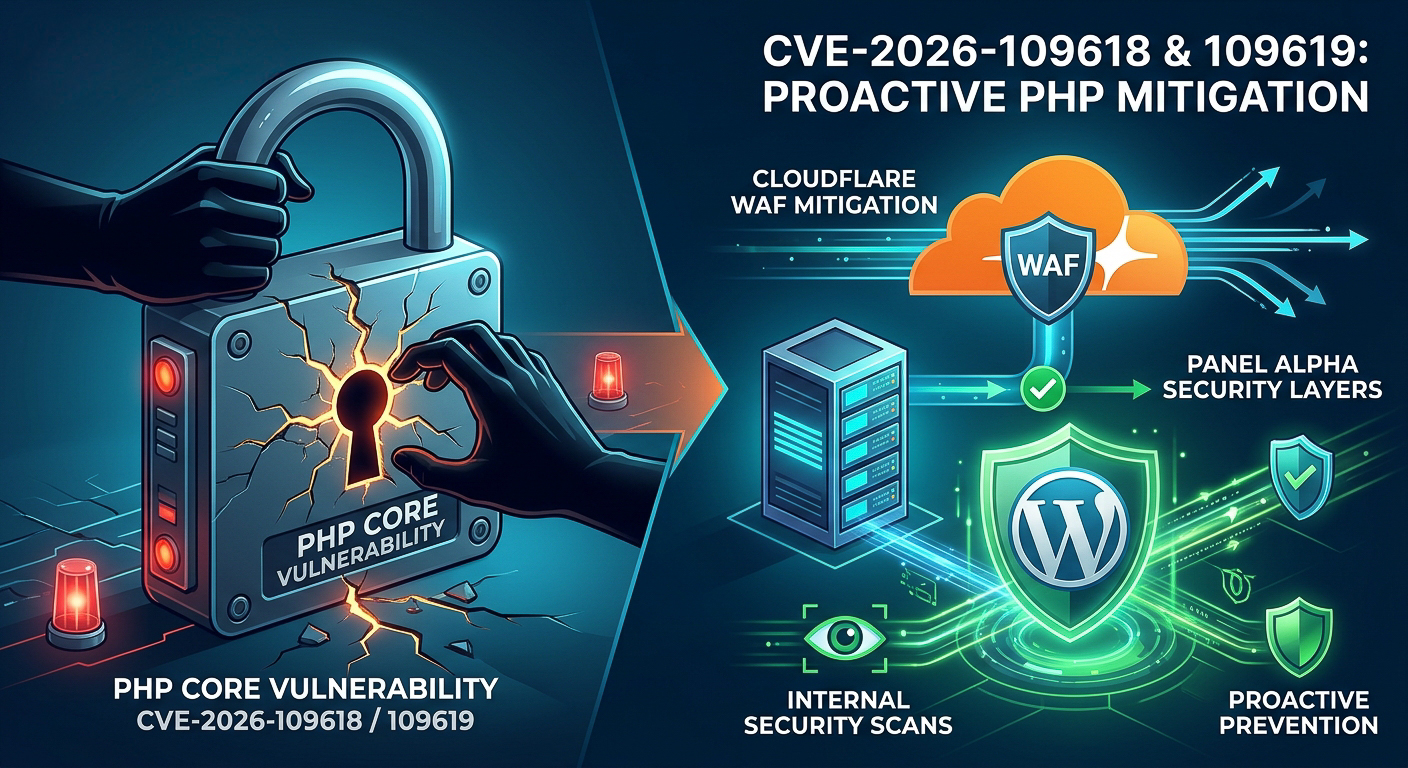 WordPress Hosting & OptimizationCritical PHP Vulnerabilities (CVE-2026-109618 & CVE-2026-109619): Our Proactive Security ResponseOlivia H.Date: Oct 21, 2026
Stay up to date
Get WordPress hosting tips, product updates and resources straight to your inbox.